







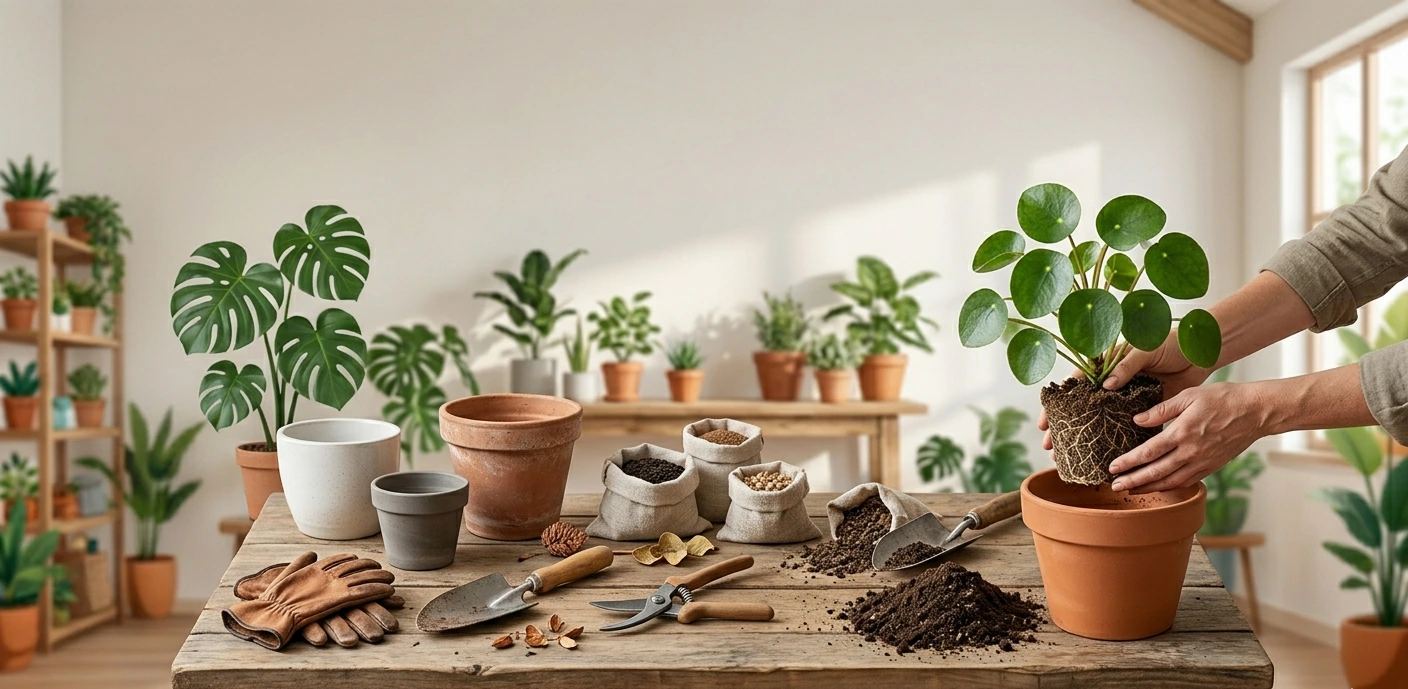
Whenever we think about the efficient growth of plants, we must look at its roots whether it needs repotting or not. Repotting is the shifting of a plant to another pot for better health and growth of a plant. Repot indoor plants in March ensures the better growth of plants and saves them from diseases and insect attack. This is the ideal season for repotting indoor plants. Carefully, choose the right size pot for repotting indoor plants. Fresh roots require room to grow and absorb nutrients from the soil mix. Soil mix is specified according to the type of plant and contains essential nutrients for efficient growth of plants. This blog will explain the check list for beginners to repot indoor plants in March.
Why March Is the Best Time to Repot Indoor Plants
Professional plant grower advice to repot indoor plants in March due to active growth of House plants in spring. You should wait for the right season to repot indoor plants because it will ensure the success of repotting plants. Moreover you should cut the extra root tips to make room for fresh root growth. Specifically, March is the suitable season for fast recovery of the roots and makes a new network of roots for anchoring and uptake of nutrients from the soil mix.
Absorption of nutrients is specified for root hairs as they are the delicate part of roots. Root hairs are basically the appendages of the epidermal cells for the absorption of nutrients from the soil mix. The uptake of nutrients is fast in this season due to fast growth of roots. You will get a safe repot of indoor plants in March as the risk of shock to specific plants is reduced and increases the growth of plants.
Signs Your Indoor Plant Needs Repotting
There are certain signs of repotting for indoor plants in March for beginners. These signs are helpful for ensuring successful repotting of plants. Following are the signs of indoor plants repotting for better health and growth.
- When you observe small growth of leaves then the plants require repotting especially in March.
- The appearance of salty crust over the soil ensures the repotting time of indoor plants.
- Tips of heavy plants fallen between watering shows the signs of repotting plants quickly.
These signs should be observed by the indoor plants caretaker in March for healthy and vibrant growth of plants.
Complete Checklist to Repot Indoor Plants in March
Repotting of indoor plants should be as your children’s requirements, it requires deep observation and efficiency in repotting plants. Following are the steps to repot indoor plants for the better growth of the plants.
Choose the Right Pot Size
Pot size is important for enhancing space for roots and increase in uptake of nutrients from the soil. Make sure of the holes in the pot for efficient drainage of excess water to get rid of water logging conditions.
Select the Best Soil Mix
Soil Mix ensures the growth of plants by enhancing the uptake of nutrients from the soil. It should be disinfectant from fungicides to protect the newly grown roots in the soil mix. It should retain water for long lasting uptake of water from the soil.
Prepare Your Plant Before Repotting
For successful repotting of indoor plants you must prepare your plant by watering 24 hours before watering. It will soften the roots of plants which will ensure the safe removal of roots from the pot.
Step-by-Step Repotting Process
Firstly choose the right size of pot and gently remove the plant from the previous pot. Cut the tips of roots for efficient growth of roots. Use a new soil mix to recharge it and maintain nutrients in the soil. Finally add little water in the soil and place the plants in sunlight.
Common Repotting Mistakes Beginners Must Avoid
It is important for the beginners to avoid mistakes when repotting indoor plants. Choose the right size of the pot, slightly bigger than the current one. Like if the previous one is 6’’ then the next one should be 8’’ not the 14’’ because the bigger size pots will contain more soil. It can lead to the water logging condition of the soil which reduces the growth of plants. Hard soil is a big challenge for the efficient growth of plants. Soil mix should have water retention capacity and enough nutrients for the growth of plants. Overwatering can retard the growth of plants as water molecules fill the air spaces in the soil and the respiration process of roots is affected. Fertilizing right after the repotting may cause complications in the growth of plant.
Conclusion
If you want to see healthy vibrant growth of plants then repot indoor plants in March. This month is the beginning of the spring and repotting make room for the growth of roots. Always choose the slightly bigger size of pot, nutrient rich soil and slightly water the plant after reporting. It will ensure the success of repotting indoor plants. Overwatering should be controlled for the growth of plants after repotting. Fertilizing after repotting is harmful for the growth of plants. Little water is enough for the growth of plants after repotting. Visit the website flowscripto to get more information about repotting indoor plants in March.
FAQ Frequently Asked Questions About Repot Indoor Plants in March
You should repot indoor plants in mid to end of March when root growth is fast and plants lack shock stress of repotting. Indoor plants can tolerate this change and enhance the growth of root system.
No, all the Indoor plants are not repotted in March. It depends upon the condition and type of plants. Tropical plants are specially repotted in this season due to fast root growth. Desert plants do not require such conditions for repotting.
Always use the best quality soil to repot indoor plants in March. It should contain nutrients and maintain water holding capacity of soil. Light weight soil is preferred for indoor plants for placing them in suitable conditions.
The best time to repot indoor plants in March is the early morning or evening. The temperature is controlled and less shock transplant is observed. Plants take enough time to adjust themselves with the surrounding environment.
Pot size is 1-2 inches larger than the previous one for efficient growth of plants. Bigger pots can contain more soil which will retain more soil and can lead to water logging conditions.


